




Incumbent Rep. Jeff Hurd wins Republican primary for Colorado’s 3rd Congressional District
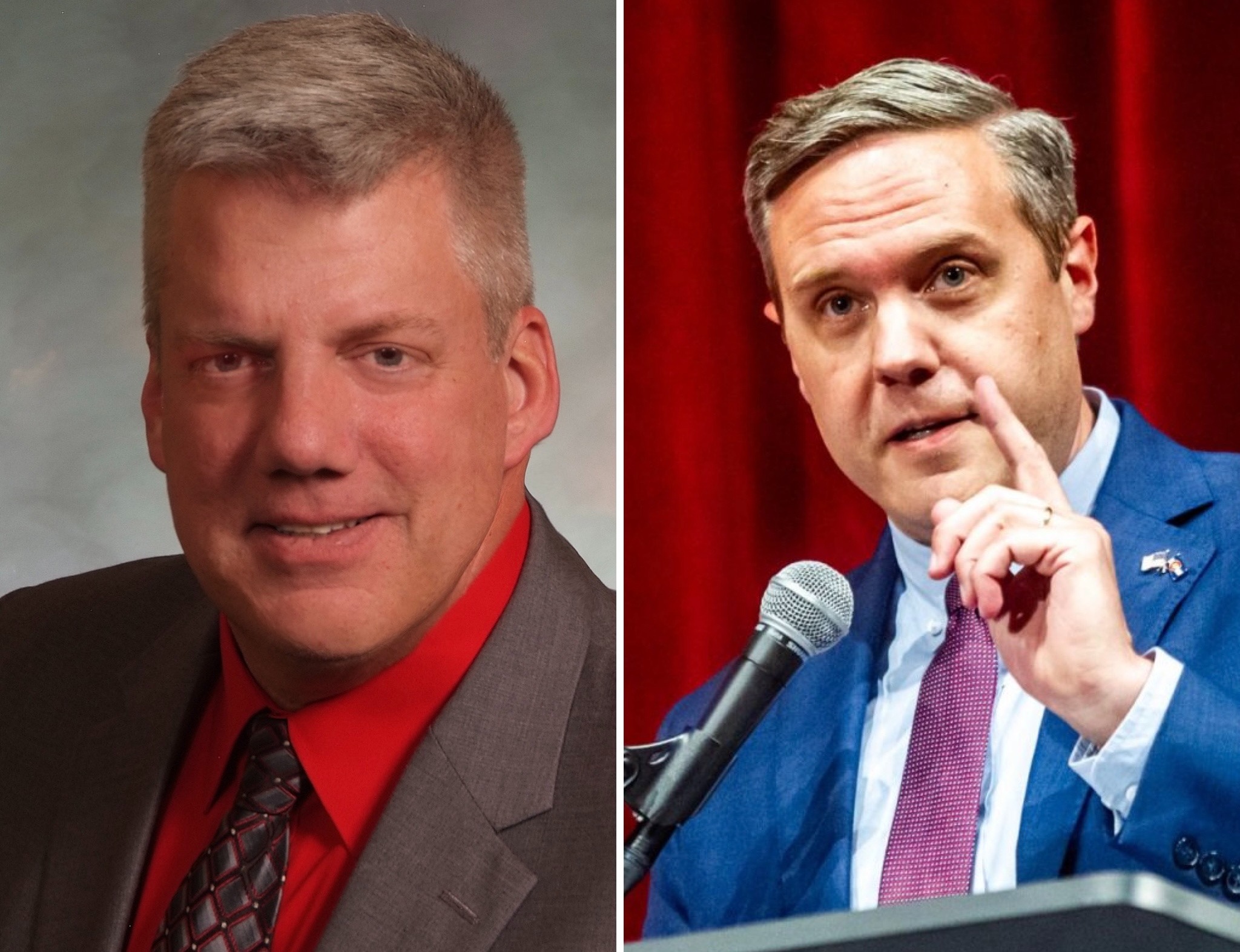
U.S. Rep. Jeff Hurd, a first-term Republican congressman, beat his GOP primary opponent, Ron Hanks, in his bid to hold onto his Western Slope congressional seat.
The Associated Press called the race shortly before 7:30 p.m. on Tuesday. Preliminary results as of Wednesday morning from the Colorado Secretary of State’s Office show Hurd beating Hanks, a former state representative, by a 33-percentage-point margin. Hurd was winning 66% of the vote to Hanks’ 33%.
“This campaign has always been about who will fight for Colorado — not who will fall in line with Washington,” Hurd said in a text message statement shared through his spokesperson. “In November, voters will have a clear choice between a proven conservative who delivers results for western and southern Colorado and a Democrat who would help advance the same agenda that’s made life more expensive, weakened our energy independence, and ignored the challenges facing rural America. I’ll continue putting this district first every single day.”
On the Democratic side, Army veteran Dwayne Romero beat businessman Alex Kelloff, the co-founder of Armada Skis.
Hurd was first elected in 2024 to represent Colorado’s 3rd Congressional District, which stretches from the northwestern corner of Colorado throughout most of the Western Slope and also swings east to include Pueblo.
The district favors Republicans and hasn’t been represented by a Democrat since 2011, though former Aspen City Council member Adam Frisch came close to flipping the seat in 2022 when he ran against then-incumbent Rep. Lauren Boebert, who won reelection by just 546 votes.
After Boebert switched districts in 2024, Hurd beat Frisch by a much wider margin — nearly 20,000 votes.
Hanks challenged Hurd in the 2024 Republican primary, which he lost. Hanks launched a last-minute bid in April to unseat Hurd after Hurd’s initial primary opponent dropped out.
Hanks has positioned himself to the right of Hurd ideologically. He participated in the Jan. 6, 2020, protest in Washington that resulted in a riot at the U.S. Capitol building, and he denies that Joe Biden won the 2020 election. He has criticized Hurd’s record in Congress for not being conservative enough and said he would be a better ally to President Donald Trump if elected to Hurd’s seat.
Hurd has largely supported Trump’s agenda while in Congress, voting last summer to pass the president’s signature One Big Beautiful Bill Act that contained much of his domestic policy goals. The sweeping measure extended and expanded a suite of tax cuts for individuals and businesses, incentivized more mining and drilling on federal land, boosted funding for immigration enforcement, and cut funding and placed new eligibility requirements on Medicaid and the Supplemental Nutrition Assistance Program, or SNAP.
But Hurd has also broken with Trump and the majority of his party on several key issues, including his vote in February to oppose Trump’s tariffs on Canada. The move temporarily cost Hurd Trump’s endorsement, though Trump re-endorsed him about a month later.
Hurd was also one of just four Republicans who voted last year to keep Minnesota Democratic Rep. Ilhan Omar in her committee seats after she was criticized for comments she made following the killing of conservative commentator Charlie Kirk. He was also among a small group of Republicans who worked with Democrats in the House to pass an extension of subsidies for the Affordable Care Act in January, an effort that died in the Senate.
Hurd’s willingness to buck his own party has made him the subject of criticism amongst some conservatives, including his primary challenger, Hanks, who said he felt Hurd has not governed as an effective conservative.
Hurd has defended those votes and others, framing himself as a pragmatic conservative and a free thinker willing to work across the aisle to get results.
The most recent campaign finance filings show Hurd has raised over $3.2 million and spent over $1.6 million for his reelection. Hanks had raised over $11,600, with $9,240 in loans, and spent over $10,700.
Published on SummitDaily.com.
