




How western Colorado shaped Julie McCluskie’s time as speaker of the Hous
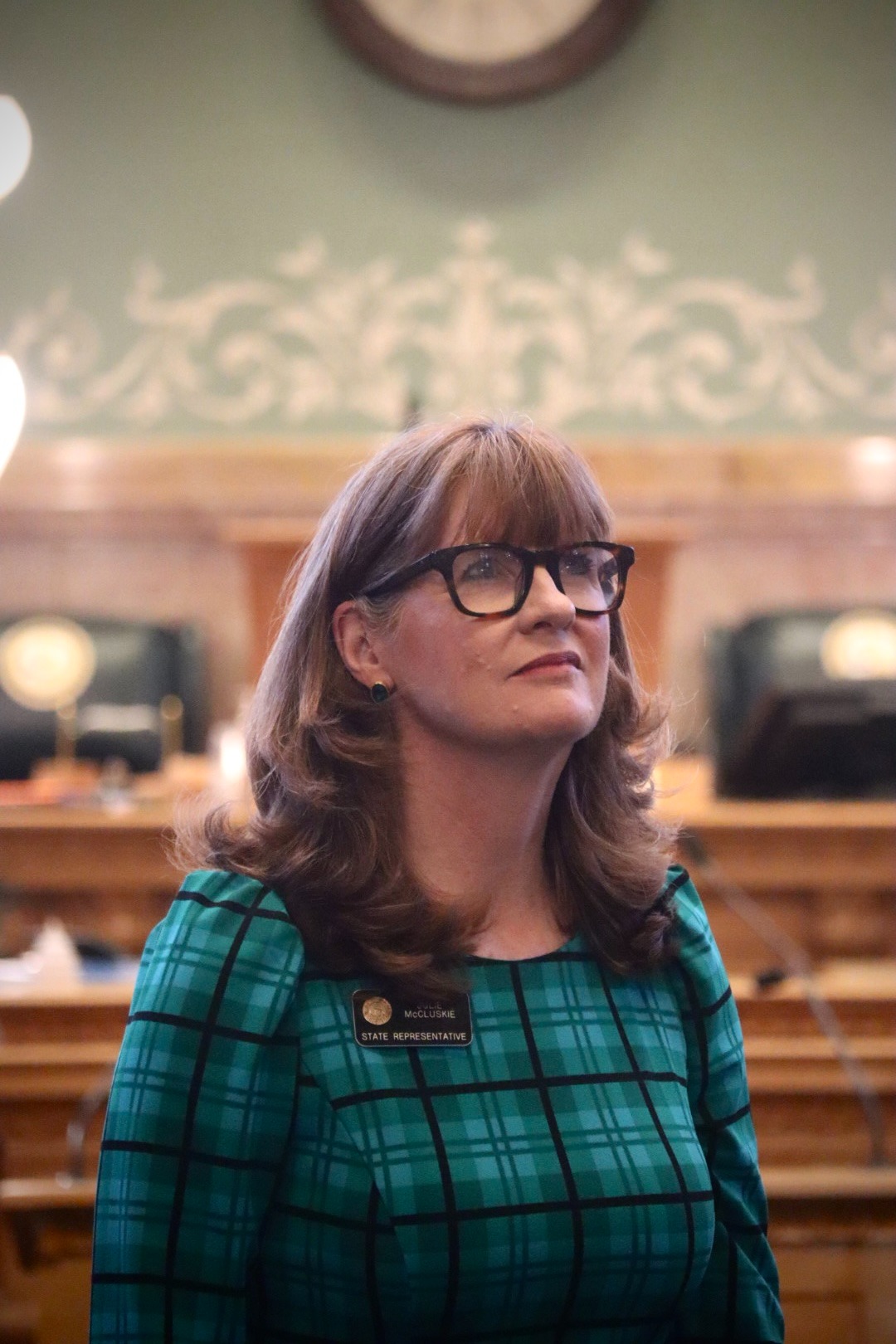
The stakes were high for Colorado’s House speaker in May 2023.
Julie McCluskie, a Dillon Democrat, was pushing a bill to the House floor that would have delayed the state’s impending reintroduction of grey wolves until Colorado secured the ability to kill wolves that chronically attack livestock using a federal rule.
It was a top priority for western Colorado legislators, whose rural communities would later become the epicenter of wolf reintroduction starting in December 2023.
The bill passed the House with wide bipartisan support but was vetoed two weeks later by Gov. Jared Polis. Still, McCluskie, the first woman from the Western Slope to serve as Colorado House speaker, said she was able to use her “bully pulpit” to ensure the bill got the attention it deserved.
“I do think the speaker has a duty to every member in the House, not just their own caucus, not just their own agenda,” said McCluskie, who represents Summit, Grand, Jackson, Lake, Park and Chaffee counties. “This was one of those rare instances where it was an issue critically important to my district, and I was able to give it maybe the voice and my own muscle to see it through.”
With McCluskie now in her final year as a state representative — term limits mean she will leave office in January — colleagues in the Capitol say her position as both a rural lawmaker and one of the most powerful politicians in Colorado helped elevate Western Slope issues that may otherwise have been overlooked.
“When you’re on the Western Slope, every little thing you do, at least the people in this building, will ask questions of ‘Why?'” said Rep. Matt Soper, a Delta Republican who often works with McCluskie on legislation affecting rural Colorado. “The Western Slope got far more benefit by her being speaker than we ever would have if she had never been speaker.”
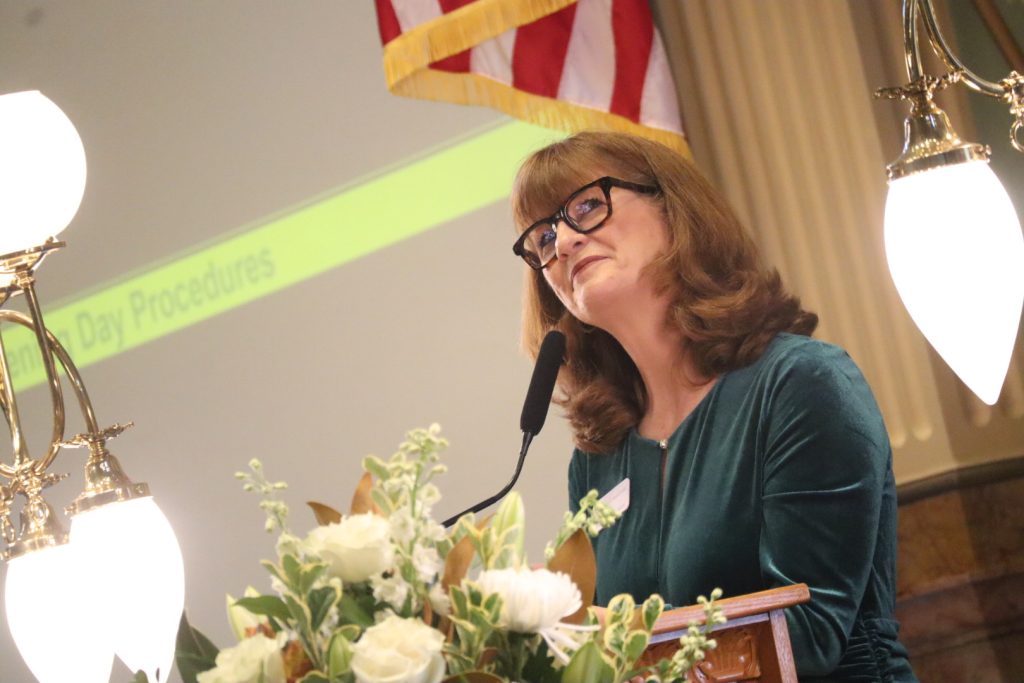
Yet the job has always been a balancing act for McCluskie, who says she often has to set aside her own policy priorities to focus on her chief task: keeping the House’s 64 other members in order.
“Probably the worst job in Colorado is to be speaker of the House,” Soper said. “Speakers never go on to do anything really significant in politics after they’ve been speaker, and that’s because they have to tell their own side ‘No’ a lot, and you have to tell the other side ‘No’ even more.”
McCluskie has led one of the largest Democratic House majorities in modern state history, one that’s delivered major policy wins for her party, but also exposed fault lines across its ideologically diverse membership. She and other Democrats have also been the subject of critiques over transparency and speech, be it by passing legislation to exempt the legislature from aspects of the state’s open meetings law or by choosing to limit floor debate.
Despite the challenges that come with the job, McCluskie said her guiding principle as a legislator has always been what’s best for western Colorado.
“If I was more worried about being speaker than representing the voices of my district, that’s not something that I think is right,” McCluskie said.
A Western Slope speakership
A former communications director for the Summit School District and the Colorado lieutenant governor’s office, McCluskie was first elected to the House in 2018 and quickly rose through the ranks.
She joined the powerful Joint Budget Committee, which crafts the state’s annual spending plan, in 2020 before later serving as its chair. In 2022, McCluskie was chosen by Democrats to serve as speaker and was re-elected to the post in 2024, becoming one of just a handful of lawmakers to serve two terms in the role.
Along with serving as the first-ever woman speaker from the Western Slope, McCluskie became the first speaker from the region in over 20 years. She believes it has helped bring attention to western Colorado amid cascading issues, from wolves and water to the affordability of housing and health care.
“It may be a bit of timing and good fortune that I ended up in this moment,” McCluskie said.
Reflecting on the vetoed wolf bill from 2023, Sen. Dylan Roberts, a Frisco Democrat whose district in the Senate overlaps with parts of McCluskie’s, said the measure may not have even made it to the governor’s desk without her help.
“I think a speaker from a different part of the state would have probably been more susceptible from pressure from the governor’s office to not even allow it onto the floor,” said Roberts, who was a prime sponsor of the bill. “Not because they were doing anything nefarious, but maybe they just would have thought it wasn’t an important issue to spend a lot of time on the floor debating.”
Merrit Linke, a Republican Grand County commissioner who’s been in local office for the entire duration of McCluskie’s tenure in the House, called McCluskie a “great advocate for western Colorado and rural resort mountain communities.”
“Speaker McCluskie and I have a running joke about the ‘Ws,’ which is what we — the Western Slope, her district — are concerned with,” Linke said, “and that is wolves, wildfires and water.”
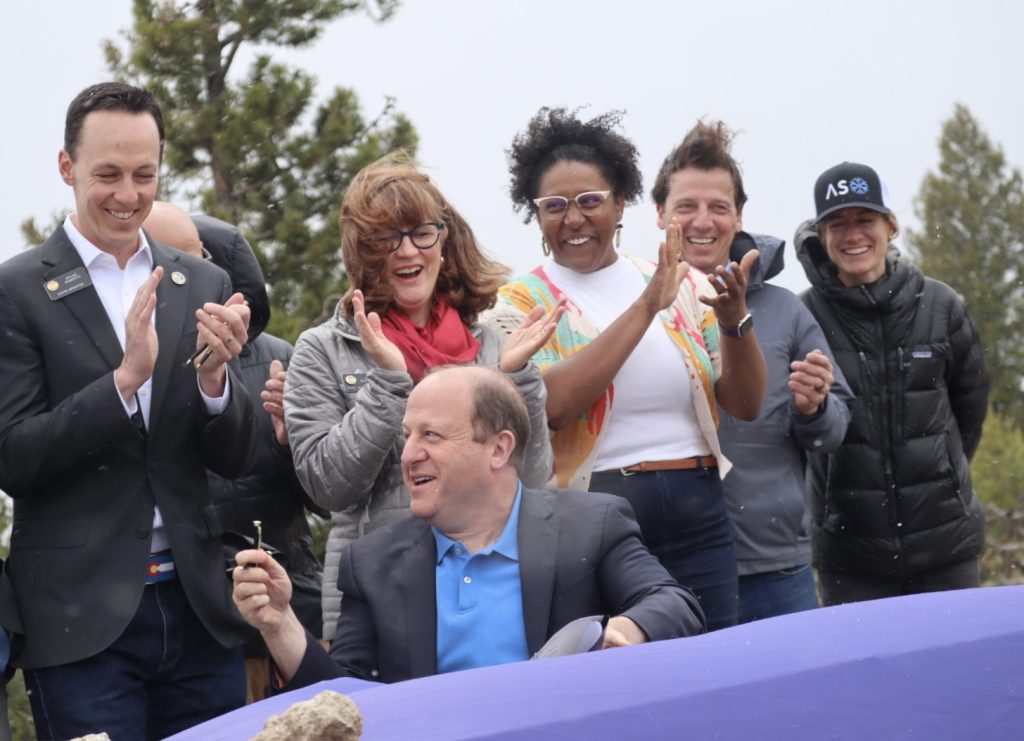
Linke said McCluskie has also added “wellness” to that list, a nod to the challenges facing rural health care.
When thinking of bills she’s most proud of, McCluskie points to her efforts to create the state’s reinsurance program in 2019, which over the past five years has helped lower health insurance premiums by over $2 billion, according to the Colorado Division of Insurance.
“Health care is still too expensive,” said McCluskie, whose district has long seen some of the highest health insurance premiums in the country. “But, to think that that bill and that program have saved people that much money feels really good.”
That bill, like many that have an outsized impact on rural Colorado, was led by a coalition of Democrats and Republicans from the Western Slope, something McCluskie says she deeply values. Still, the leader of the House has largely been in lock-step with her party on its biggest priorities, from strengthening abortion access and LGBTQ rights to expanding restrictions on firearms.
Linke said McCluskie is “in a tough spot” when it comes to representing a politically diverse district like hers. While her home county of Summit is reliably blue, Grand County leans conservative. Linke said he has been disappointed at times in McCluskie’s support for issues that he believes are out of line with the majority of his community, like gun control.
“The Democrats certainly have the majority (in the legislature), and she has to probably go along with some of that,” Linke said. “I understand that, but at the same time, I would be pretty disappointed in anybody that represents these districts that would be shooting down Second Amendment rights.”
Bipartisanship, compromise and ‘really good fights’
While McCluskie has championed much of Democrats’ legislative agenda, she’s been unapologetic about seeking bipartisanship and compromise.
McCluskie thinks back to her days working alongside former Sen. Bob Rankin, a Republican from Carbondale who sat with her on the Joint Budget Committee before resigning from the legislature in 2023. She described Rankin as being as “staunch a Republican as you’ll ever meet,” but someone whom she trusted and would follow his lead on certain decisions.
“We had some really good fights,” McCluskie said. “The kind of fights where you walk away from something and say, ‘You know what, he’s right. I learned something there, and I wasn’t seeing it that way. Now I understand.'”
Rankin said McCluskie could always see his point of view, even if she ultimately took a different position. Rankin, who remembers McCluskie as a “methodical listener and meticulous notetaker,” said she’s someone who has always been “more interested in the result and legislation” than in being a political firebrand.
While they had the fundamental disagreements that divide most Republicans and Democrats — guns, abortion, taxes — he said their bigger fights were often about ensuring rural Colorado was represented, on which they always presented a united front.
“The issues in the legislature really revolve around rural versus urban — at least if you’re rural, they do,” Rankin said.
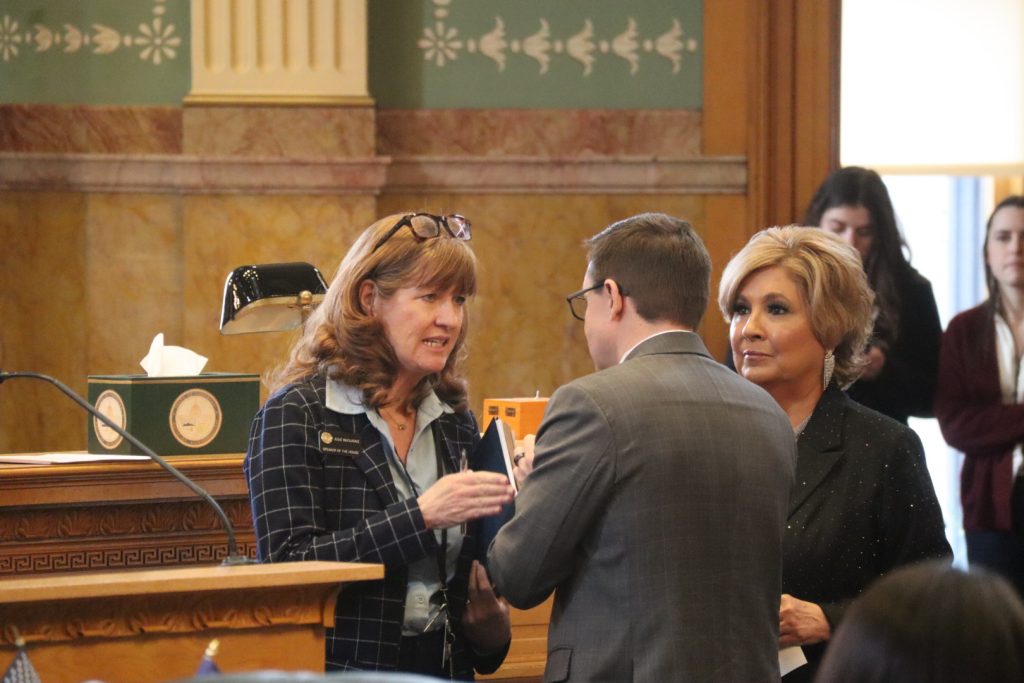
McCluskie has also shown a willingness to listen to other perspectives within her own caucus, which straddles a diverse membership of moderates and progressives.
After McCluskie voted against a bill in 2023 that would have prohibited landlords from evicting tenants without just cause, the bill’s sponsor, Rep. Javier Mabrey, one of the legislature’s more progressive Democrats, asked her to join him for an eviction court hearing.
“She came and learned a little bit more about what my clients were going through and about what I was trying to do with that piece of legislation,” said Mabrey, a Denver-based eviction defense lawyer.
The next year, Mabrey ran a similar bill. Not only did McCluskie vote in favor of the measure, but she called it a priority for Democrats in her opening speech of the session.
Mabrey said McCluskie holds a “strongly held belief of how legislation is supposed to be run,” which includes listening to opposing voices and finding compromise when possible.
“I’ve actually learned a lot from that,” he said. “You can have meetings on bills where people fiercely disagree with you and be open about the fact that, ‘Hey, we may never agree with each other on the core of what we’re trying to do here.’ But getting input from impacted groups on how the law works is important.”
‘They’re here to see us work’
McCluskie’s willingness to listen to dissenting voices isn’t without limits.
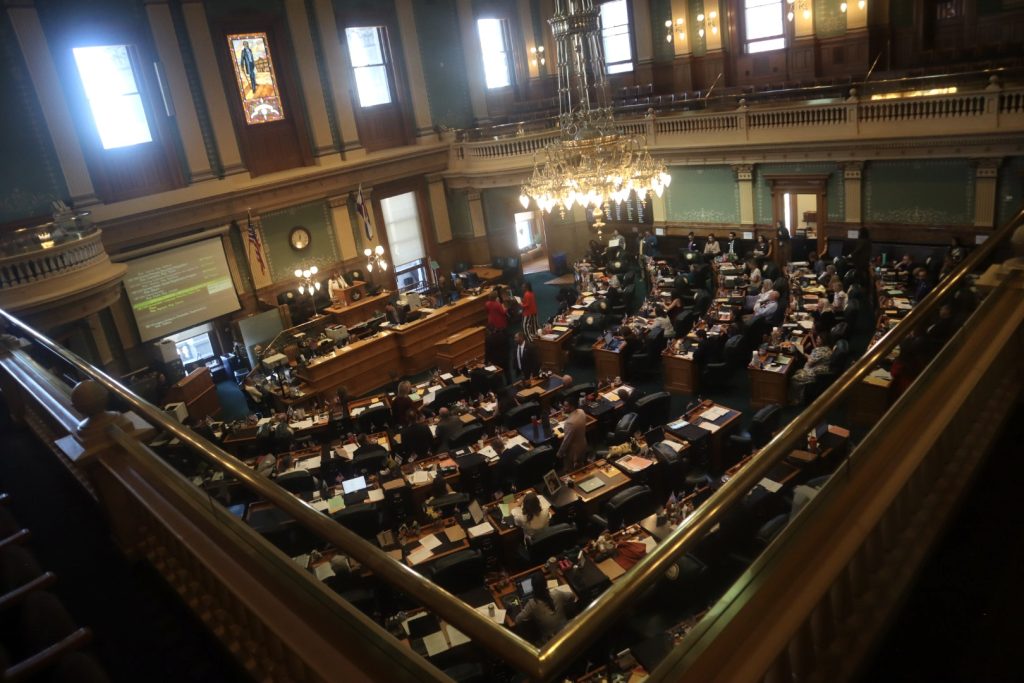
When two gun control bills were being considered in the House in March 2023, McCluskie and House Majority Leader Monica Duran, a Wheat Ridge Democrat, limited debate for the first time in at least a decade, against Republican objections.
Unlike some other states, Colorado allows unlimited debate time during voice votes on bills, known as second readings. Debate is limited for third and final readings.
House leaders have since limited and even outright ended debate in several more instances. Republicans, who are outnumbered nearly 2-to-1 by Democrats, have accused the House majority of curtailing their speech.
“There’s a saying in the legislature which is, ‘The majority always gets their way, but the minority gets their say,'” said Soper, the Delta Republican.
“That’s the black mark on Julie McCluskie,” he said. “She has, in my opinion, been an amazing speaker. She’s a good friend, but even good friends can make mistakes. And, to me, that was a mistake because it set the precedent that in the House of Representatives you can … cut off the ability for the minority to negotiate.”
McCluskie said debate has “been abused” at times and that Republicans in those instances were effectively filibustering legislation, meaning they used their speaking time to hold up a vote.
“I think that’s something the public is tired of,” McCluskie said. “They’re here to see us work, not waste time.”
Duran said McCluskie never makes decisions without serious thought. When she and McCluskie made the call to limit floor debate in 2023, it was a mutual decision after hours of consideration.
“And I think that’s also the key, that we’ll talk. I might have an idea and be ready to do something and jump in and do it, and she needs to process and take some steps and look at things,” Duran said. “But she has always been supportive of any decision I’ve made … and I’ve tried to do the same because of that respect for each other.”
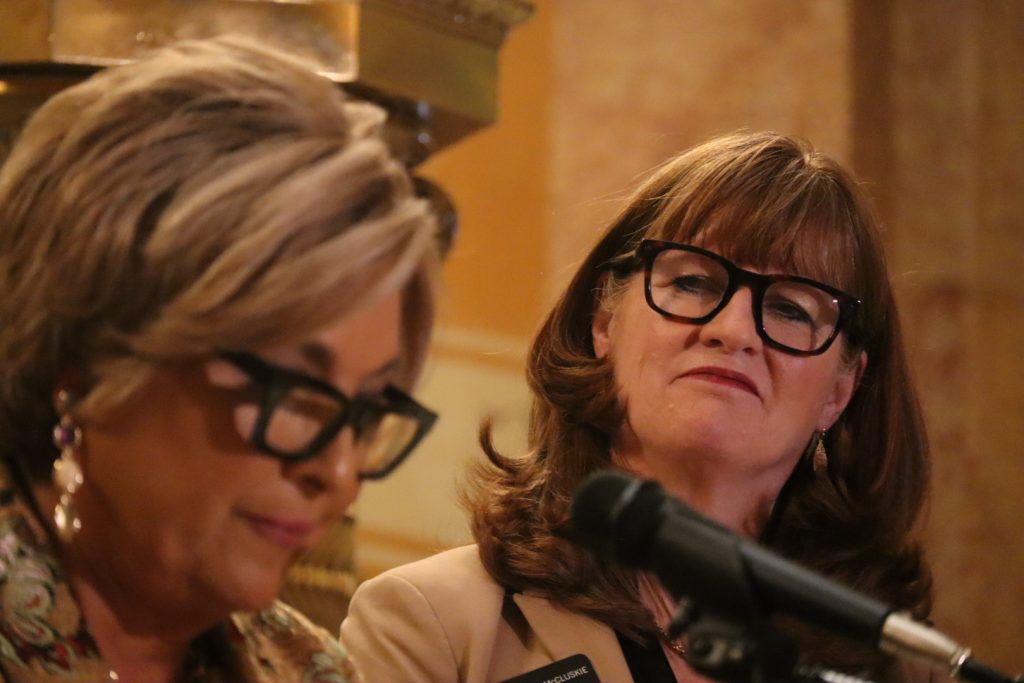
McCluskie and Democratic leaders in the legislature have also faced criticisms over transparency.
They were sued twice in 2023 for skirting the state’s open meetings law. They lost one of the cases after a judge ordered them to stop using a secret voting system. They settled the other, which was brought by lawmakers within their own caucus who alleged that they had been holding secret meetings and had discussions using an encrypted messaging app.
Following that, Democrats in 2024 passed legislation that exempts the legislature from aspects of the state’s open meetings law by changing the definition of a public meeting to exclude certain text messages and emails between lawmakers.
The measure was co-led by McCluskie, who defended the legislation as a way of modernizing the state’s open meetings law to account for how lawmakers communicate digitally.
“I think what we were trying to do is define what is of public interest, and absolutely it should be transparent,” McCluskie said. “(But) what are those administrative or operational things that we run into that we need to talk about?”
‘We’ve built some momentum’
McCluskie’s time representing western Colorado under the Capitol’s golden dome, where she spends roughly a third of the year during the 120-day lawmaking session, is also when she sees her district the least.
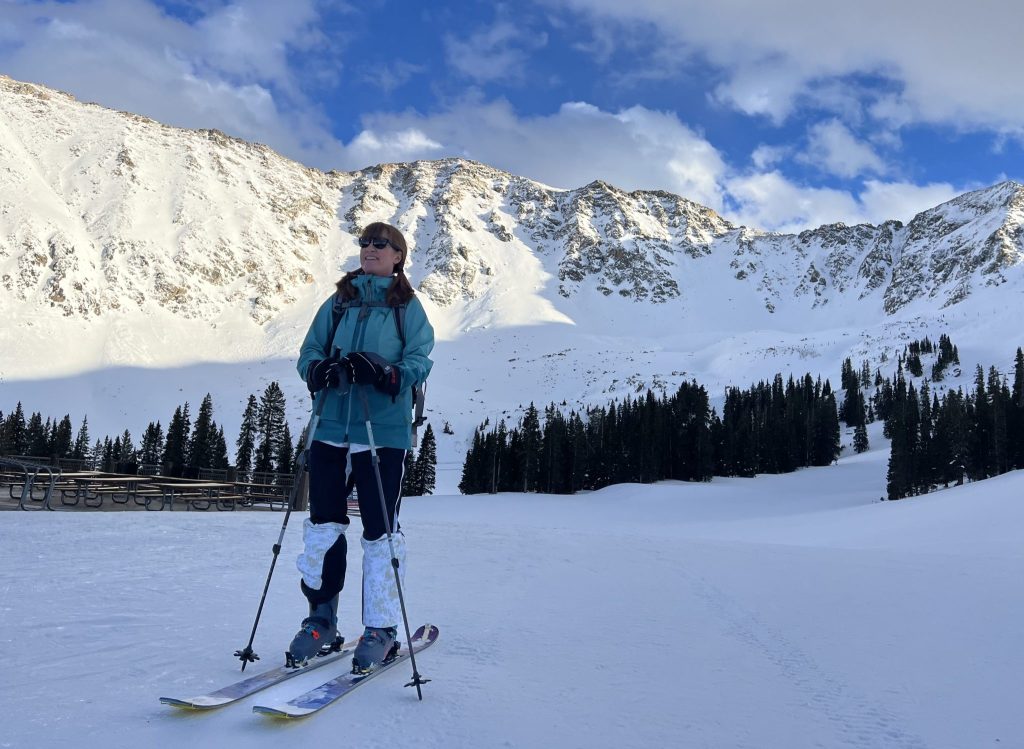
It’s why she relishes the opportunity on weekends to return to Summit County, which she and her husband have called home for 25 years. There, McCluskie can be found skinning uphill at Arapahoe Basin Ski Area, tending to her chickens, and hiking with her dog, Nessie, an 85-pound black Labrador lovingly named after the Lochness Monster.
Yet McCluskie, who called nature a “critical part of my own well-being and mental health,” often finds herself staying in Denver and working through the weekends the deeper she gets into the session.
“That’s one thing that not every legislator has to deal with,” she said. “Those of us that are commuting large distances, we’re not home, we’re not with our family during the week, and it takes a toll.”
McCluskie didn’t say whether she was interested in pursuing another elected office once her term in the House ends in January.
With just under two months left in her final regular legislative session, which ends on May 14, McCluskie said she’s focused on the work that remains. That includes closing a $1.5 billion budget shortfall in this year’s upcoming spending plan, an issue that has ignited finger-pointing between the two parties.
Outside of policy fights, McCluskie said her focus in the final months of her speakership will be on promoting civility, something she worries is slipping away.
McCluskie blames polarization and vitriol at the national level, which she said is seeping into state and local politics and is being inflamed by social media. The Capitol has seen its share of shouting matches and personal spats between legislators, which have led to resignations from lawmakers in both parties in recent years.
“When I first came into the Colorado legislature, there was an air of greater respect,” McCluskie said. “I don’t want to say that there isn’t any respect now, but the tone and the tenor was more civil.”
Roberts, the Democratic senator from Frisco, said it’s an issue he and the speaker talk about often while carpooling between meetings and town halls in their districts. It’s another area where he believes coming from the Western Slope — where politics and economies are as diverse as the landscapes — has been a benefit.
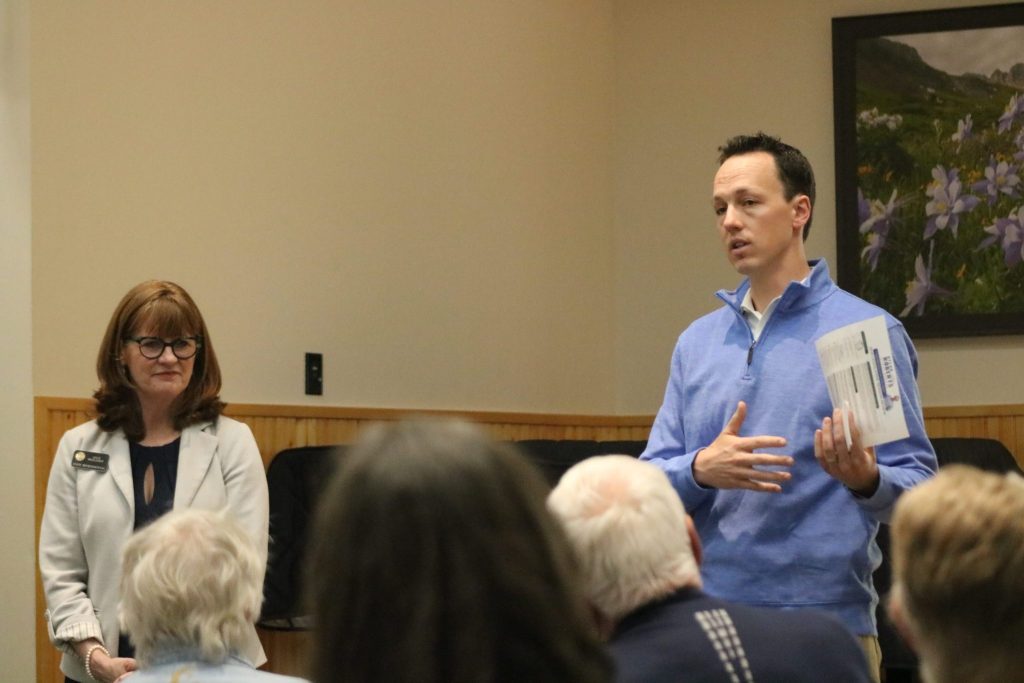
“I think both of us, living in smaller towns and in rural districts, recognize that you have to see your neighbors and your continents every day,” Roberts said. “We know in our smaller communities, you can’t just push somebody aside because of political ideology.”
McCluskie said the legislature still has work to do when it comes to understanding rural communities, which themselves are not a monolith. Even if she hasn’t shifted that culture “as much as I would like,” McCluskie feels there’s been progress at the statehouse for rural representation.
“I hope that by raising the issues that we have these last few years,” she said, “it means we’ve built some momentum and that it continues with my departure — that it doesn’t evaporate.”
Published on SummitDaily.com.
